All posts by mayor

Alžbetina Street

Alžbetina Street is situated in the heart of Košice’s city center. It is one of the main streets in the historic district and holds great historical and cultural importance. The street is named after Saint Elizabeth of Hungary, the patron saint of The Cathedral of Saint Elizabeth.

The street is lined with a mix of architectural styles, blending both historic and modern elements. You can find buildings ranging from Gothic to Renaissance, Baroque, and Art Nouveau. Many of these buildings have been beautifully restored, preserving their historical charm.

Alžbetina Street is known for its diverse range of shops, boutiques, and restaurants. It offers a variety of shopping options, including clothing stores, artisanal shops, and specialty stores. Additionally, there are numerous cafes, restaurants, and pubs where you can enjoy a meal or a drink.

Alžbetina Street is an important street in Košice, offering a mix of historical architecture, cultural attractions, and a lively atmosphere. It’s a great place to explore, shop, dine, and experience the vibrant pulse of the city.

Mlynská Street

Mlynská Street is situated in the historic center of Košice, close to the main artery of the city, Hlavná. It is a relatively short street but holds historical and cultural significance.

Mlynská Street has a long history dating back to the Middle Ages. The name “Mlynská” translates to “Mill Street” in English, indicating its association with mills that were once located in the area. The street was an important part of the city’s industrial and trade activities.

The street is characterized by its charming, picturesque buildings that showcase various architectural styles. Many of these buildings have been well-preserved and restored, adding to the street’s architectural appeal. At the end of this street you can find one of the landmarks of Košice, Jakab’s palace.

Mlynská Street is also a popular destination for food and drinks. Along the street, you’ll find a variety of cafés, restaurants, fast-food stands and bars, offering both local and international cuisine. It’s a great place to relax, grab a bite to eat, or enjoy a cup o’ coffee while soaking in the atmosphere.

Hrnčiarska Street

Hrnčiarska Street is a notable street located in the centre of Košice. It is one of the oldest streets in the city and holds historical and cultural significance. The street runs parallel to the main artery of the city, Hlavná Street, and is easily accessible on foot.

The street dates back to the 14th century and has a rich history. It was originally a craft-oriented street, known for its pottery workshops. The name “Hrnčiarska” is derived from the Slovak word “hrnčiar,” which means “potter” in English.

Charming, colorful buildings line up along the street which showcase various architectural styles, including Gothic, Renaissance, and Baroque. Many of these buildings have been well-preserved and restored over the years, adding to the street’s unique character.

As mentioned earlier, Hrnčiarska Street has a strong association with pottery and ceramics. In the past, it was a hub for pottery production, and the craftsmanship of the local potters was highly regarded. Today, you can still find pottery studios and shops along the street, offering handmade ceramics and traditional Slovak pottery.

Hrnčiarska Street is home to numerous art galleries, craft shops, boutiques, cafés, and restaurants. The street often hosts cultural events, exhibitions, and festivals, attracting both locals and tourists.

Slávia

  • Slovak Name: Hotel a kaviareň Slávia
  • Location: Old Town
  • Foundation: 1901
  • Style: Secession

Hotel Slávia has a rich history dating back to 1901 when it was first established. It is one of the oldest hotels in Košice and has witnessed significant historical events throughout the years.

The hotel is situated in the heart of Košice, on Hlavná Street. This central location places it in close proximity to many of the city’s attractions, historical sites, shops, and restaurants.

It features a beautiful Art Nouveau architectural style, which was prevalent during its initial construction. The building’s facade showcases decorative elements, curved lines, and intricate details that are characteristic of the Secession period.

Hotel Slávia has been a gathering place for artists, intellectuals, and notable figures throughout its history. It has played a role in the cultural and social life of Košice, hosting various events and serving as a venue for celebrations, conferences, and exhibitions.

In 2015, Slávia underwent a reconstruction. Today, the building houses a café/restaurant and a boutique hotel.

Old Town Hall

  • Slovak Name: Stará radnica
  • Location: Old Town
  • Foundation: 1779
  • Style: Baroque, Classicism
  • Architect: Ján Langer
  • Used by the City Council until 1928
  • Until 1995 the building was used as city library
  • Today, it is used for official occasions

National Theatre

  • Slovak Name: Národné divadlo Košice
  • Location: Old Town
  • Foundation: 1899
  • Style: Neo-Baroque, Secession
  • Architect: Adolf Láng

The National Theatre — formerly known as State Theatre — is located in a beautiful neo-baroque building that was originally constructed between 1879 and 1899. Over the years, it underwent several renovations and expansions, with the most recent major renovation taking place in 2013.

The building is a beautiful example of Neo-Baroque architecture. Its exterior features intricate decorations, sculptures, and a grand entrance. Inside, there is a lavish auditorium with a capacity of around 750 seats, adorned with elegant décor and ornate details. The building’s architecture and historical significance make it a notable landmark in the city.

The National Theatre in Košice offers a diverse repertoire of performances, including opera, ballet, drama, and musicals. It hosts a wide range of productions, ranging from classical works to contemporary performances. The theatre attracts both local and international talent, and its performances are known for their high artistic quality.

The theatre offers performances in Slovak, as well as occasional productions with subtitles or translations in other languages. It strives to make theatre accessible to a wide audience and encourages cultural participation.

St. Urban’s Tower

  • Slovak Name: Urbanova veža
  • Location: Old Town
  • Foundation: 15th century
  • Style: Renaissance, Gothic

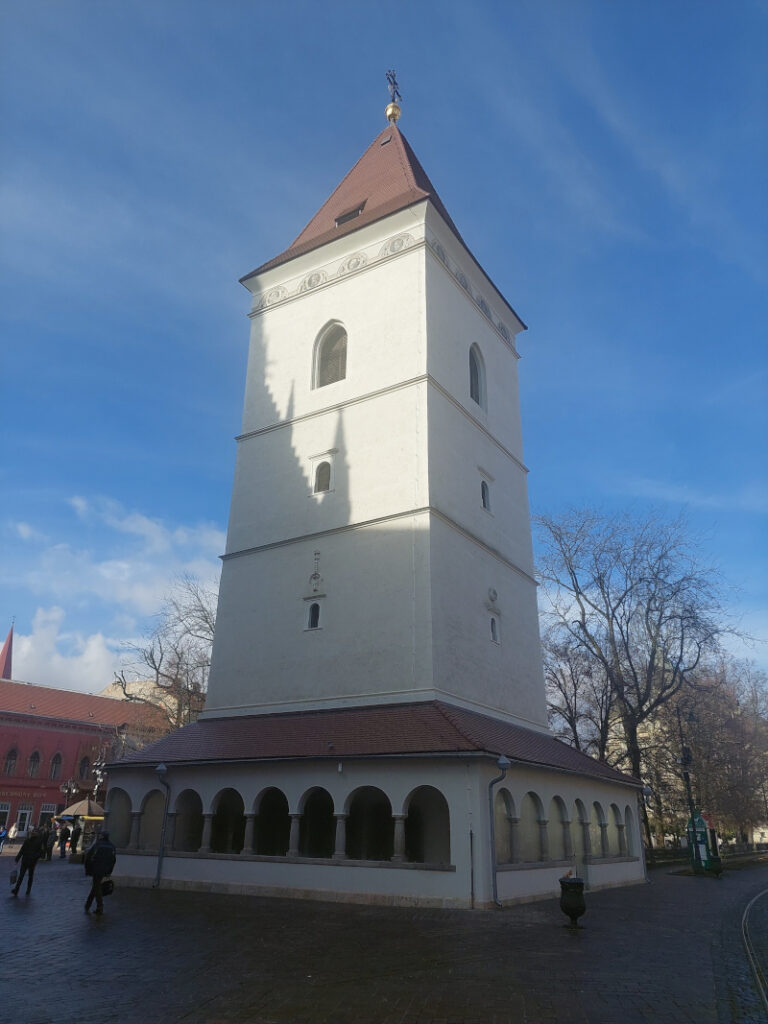
St. Urban’s Tower is a significant historical monument in Košice. This Renaissance bell tower is part of the St. Elisabeth Cathedral complex, and it is named after St. Urban, the patron saint of wine growers.

Constructed in the 15th century, St. Urban’s Tower has been witness to the city’s rich history. The tower stands at around 60 meters tall and is recognizable by its iron double cross. The original bell, named after St. Urban, was installed in the tower in 1557 but was unfortunately destroyed in a fire in 1966. To this day, the broken bell is exhibited in front of Urban Tower.

The tower has undergone several restorations over the centuries. After the fire in 1966, it was restored and a new bell was installed in 1996. The new bell, weighing about seven tons, is one of the largest bells in Slovakia.

The tower was housing a small wax museum which is unfortunately not active anymore. In 2021 St. Urban underwent a restauration and is now coloured white.

The Urban’s Tower before the reconstruction

Jakab’s Palace

  • Slovak Name: Jakabov palác
  • Location: Mlynská Street
  • Foundation: 1899
  • Style: Neo-Gothic
  • Architect: Peter Jakab

Jakab’s Palace is situated in the historic center of Košice, on Mlýnska Street. The palace is an impressive example of Neogothic architecture. It features a distinctive facade adorned with ornate architectural details, including sculptural decorations and intricate stonework.

The palace was originally built 1899 by the architect Peter Jakab who is member of a prominent noble family in Košice. Over time, the ownership of the palace changed hands several times, and it has served various purposes throughout its history. Till 1968 there was a river flowing next to it. Today, Jakab’s Palace is not accessible to the public.

Jakab’s Palace is considered an important cultural landmark in Košice. It has been recognized for its architectural and historical value and is protected as a national cultural monument. The palace serves as a symbol of the city’s rich heritage and architectural legacy.

Jakab’s Palace is conveniently located in the city center, making it easily accessible to visitors. Its central location allows for easy exploration of other nearby attractions, such as the St. Elisabeth Cathedral, the National Theatre, and the historic Main Square.