

Image source: https://foto-ulic.appspot.com
Image source: https://foto-ulic.appspot.com


Image source: https://foto-ulic.appspot.com
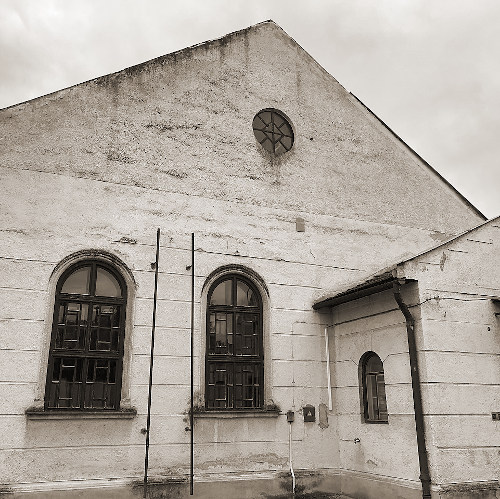
When World War I reached the Northern border of Slovakia in 1915, the Hasidic Jewish community of Stropkov (SK) and Radomyśl Wielki (PL) fled from the Russian army to Košice – back then one of the largest Jewish centres of this part of Europe – where they joined the orthodox community. After the war in 1920, the Hasidic community built an own synagogue on today’s Krmanova Street.
The elongated building is covered by a gable roof. Its design is simple, and it has high round-arched windows. In its original form, the synagogue had two prayer halls facing to the East, each of which could be entered from the South and the North through a vestibule.

The Hasidic Synagogue’s interior underwent a massive remodelling between 1957 and 1959, and serves today as a technical laboratory for metals.
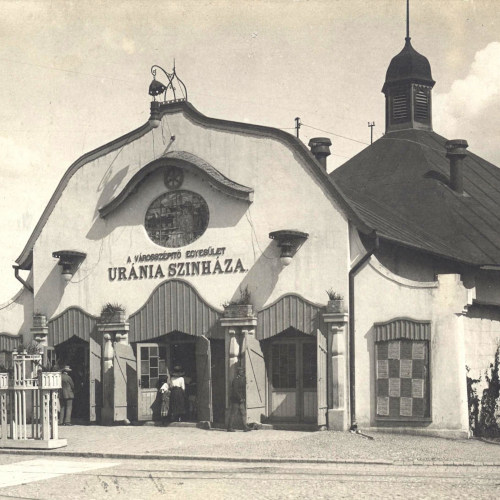
On the 30th May 1909 the Kino Uránia, one of Košice’s first cinemas, opened its doors for the first time. Soon after it had been renamed to Bio Radio. It was located on today’s Liberation Square where the shopping centre Aupark can be found.

The cinema – which was mainly built due to the initiative of city counsellor and film enthusiast Lajos Ékes Körmenda – had a capacity of more than 700 seats, the tickets were divided into three price categories. Instead of lengthy drama productions, Kino Uránia preferred to show documentaries, news and scenes from everyday life.

In the last years of its activity, Kino Uránia had become less popular, and it was pejoratively called “rats’ cinema”, as the small rodents had slowly overtaken the building. In 1939 the cinema stopped operating and was subsequently torn down.

Image source: https://foto-ulic.appspot.com
Where today there is a fountain next to St. Michael’s Chapel, once a proud monument was located: the Honvéd-szobor. A bronze statue with two larger-than-life depictions of men, standing on a pedestal on a small hill.

The monument was erected and unveiled on September 9th 1906 in memory of the 9th Patriotic Battalion of Košice, which fought in the Hungarian Civic Revolution and War of Independence in 1848-49. Although the revolution failed, it is one of the most significant events in Hungary’s modern history, forming the cornerstone of modern Hungarian national identity. ‘Honvéd’ means ‘homeland’ in Hungarian.

The bronze statue depicted a soldier of the 48th national guard, behind him a knight of the Kuruc Army, a group of armed anti-Habsburg insurgents in the Kingdom of Hungary between 1671 and 1711.

After Slovakia had joined the first Czechoslovakia, the Honvéd monument was torn down on the 17th of March 1919.

Image source: https://foto-ulic.appspot.com
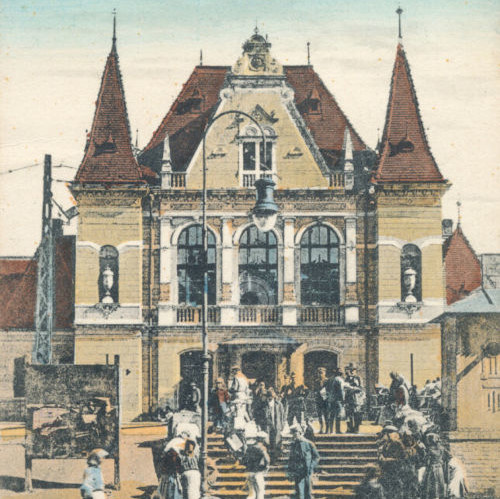
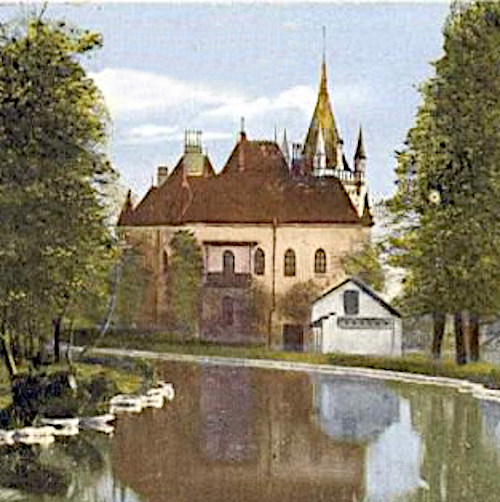
In the 1890s, first trains were going to and from Košice. Train travelling quickly became popular, a proper station was necessary. Renowned Hungarian architect Jozef Hubert was given the assignment to create a new station building.

A magnificent Neo-Gothic construction saw the light of day in 1986, encompassing elements of French Renaissance castles.

In the following decades, the romantic building should become one of the city population’s most-beloved sights. In the 1970s, the station was torn down in order to make place for a new one.

Image source: https://foto-ulic.appspot.com
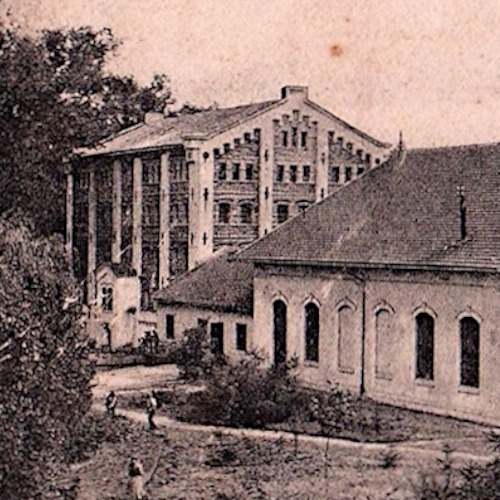
During the time when the river was still flowing through the centre of Košice, several mills were located by its water. One of them was the Central Mill, located in what is nowadays the southern extension of the city park.

In the year 1862 the newly-founded company Košice Artificial Mill purchased the Central Mill from the city and built two multi-storey buildings in its proximity. The mill expanded over time. During a reconstruction in the year 1900 the nearby bathhouse was torn down.

In 1945, the Central Mill was nationalised and in 1948 the East Slovak Mills Company began to operate it.
On 23rd of August 1976 the mill was hit by a devastating fire which, according to eyewitnesses, was glowing for several weeks. The conflagration left only ruins behind.


Today, a small hill is the sole remainder of the Central Mill.

Image source: https://foto-ulic.appspot.com
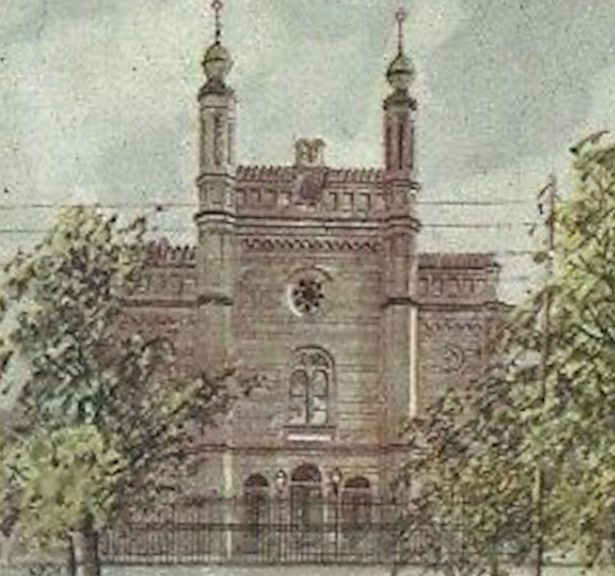
Kosice’s oldest synagogue was once an old granary on Zvonárska street which had been converted to a synagogue in 1844. As the Jewish community grew quickly in the next decades, it was decided to construct a bigger house of prayer. In 1866 a new synagogue was built on Moyzesova street after plans by architect Michal Répaszky.

The two towers which reminded many of the ones on Christian churches, as well as the placement of the Almenor, the raised rostrum from which the Torah is read, at the upper end of the house of prayer instead of in its centre led to controversy within the Jewish community. Some considered it a sin to even enter the new church building. This controversy led eventually to a schism of Košice’s Jewry into three factions: Orthodox, Neologist, and Status Quo Ante, i.e. those who hadn’t joined any of the other two.

The dispute went thus far, that the critics of the new synagogue turned to the Minister of Religion and Education, who sent mediators to Košice in order to discuss the contradictions within the Jewish community. The new synagogue was given to the Neologist community, while a small conservative-style synagogue was constructed right next to the large one by the Status Quo Ante. The Orthodox believers continued to visit the synagogue on Zvonárska street. In 1899 the Orthodox community built a proper synagogue on the same street.
In 1926 the Status Quo Ante and Neologist communities switched their synagogues. The Neologists tore down the small building and replaced it with a modern temple with a cupola (nowadays the House of Arts). The Status Quo Ante believers transformed the large synagogue to their needs by tearing down the two towers and putting the Almenor in the centre. It was inaugurated in 1927. The Orthodox community built a larger synagogue in the same year on Puškin street.

The Shoah had taken its toll on the Jewish populace in Košice which had become significantly smaller after 1945. Eventually, the large synagogue had fallen into disrepair and was torn down in 1958 to make place for the extension of the later House of Arts.
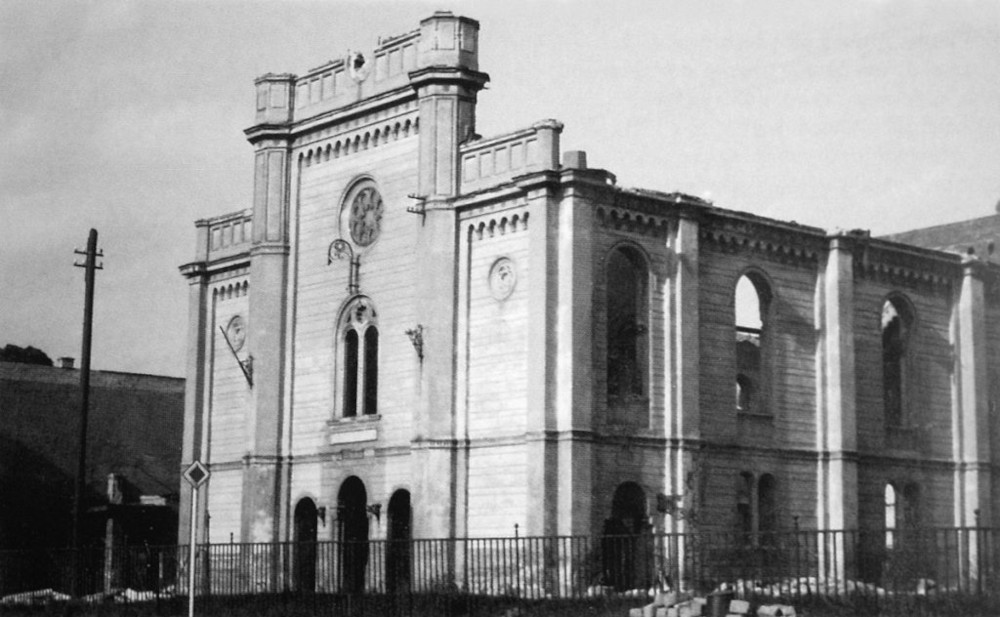
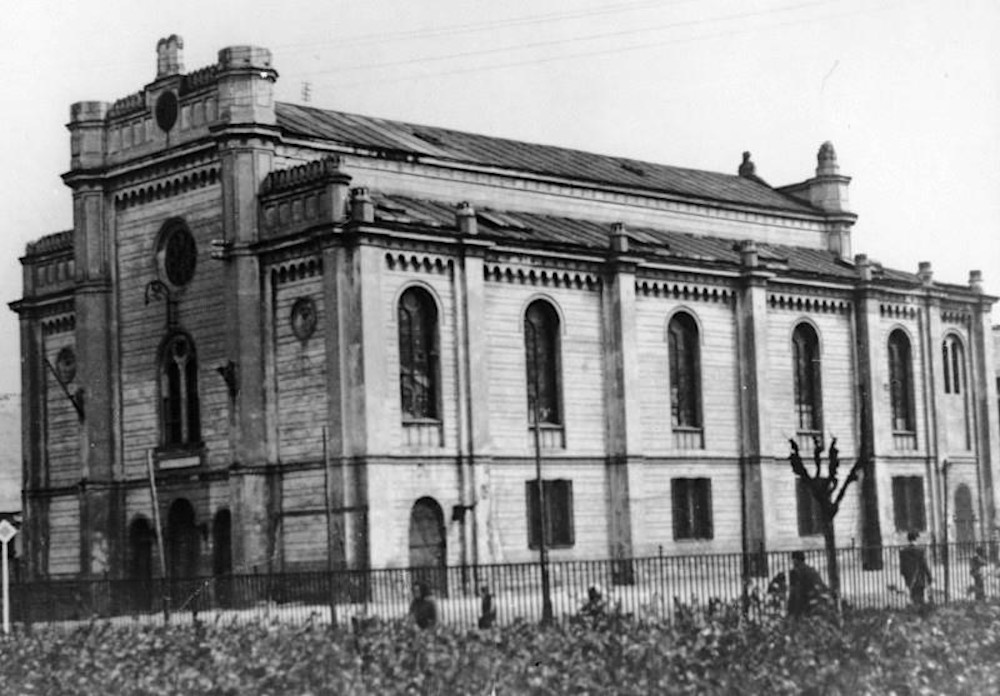
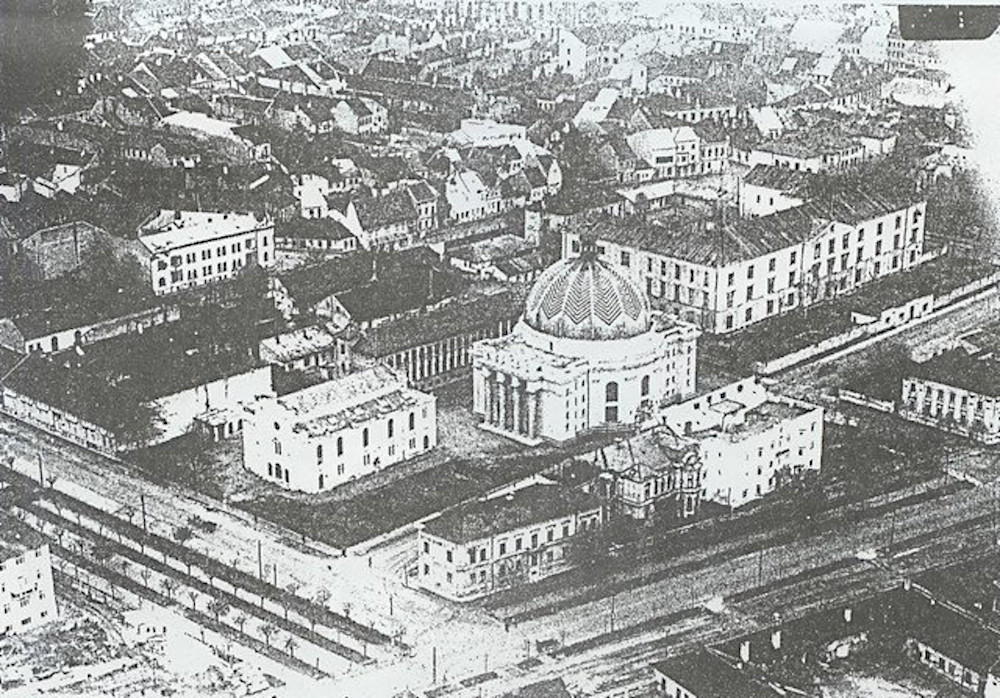
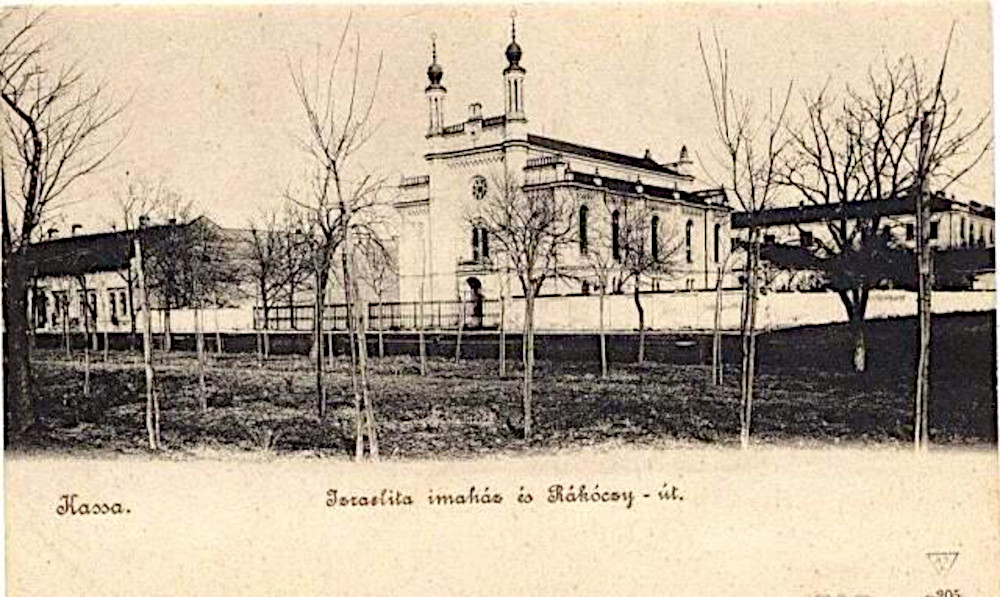
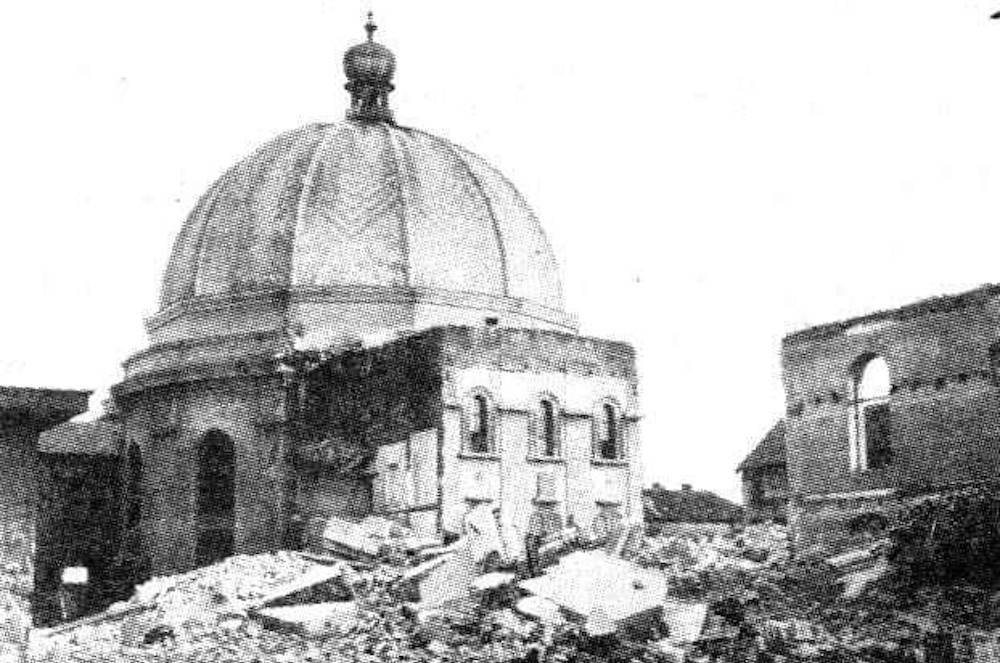
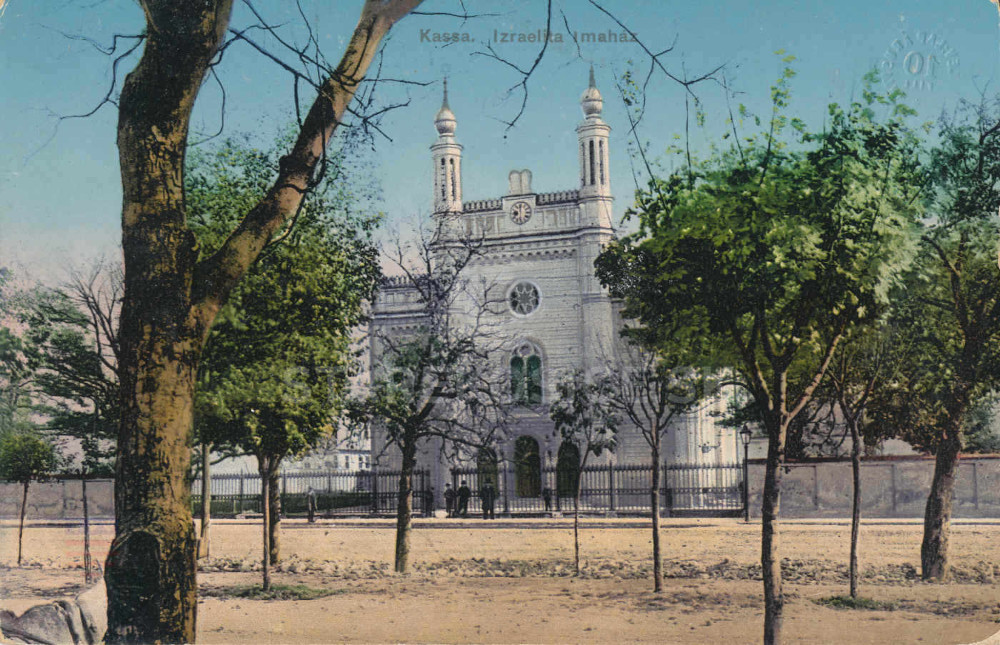
Image source: https://foto-ulic.appspot.com
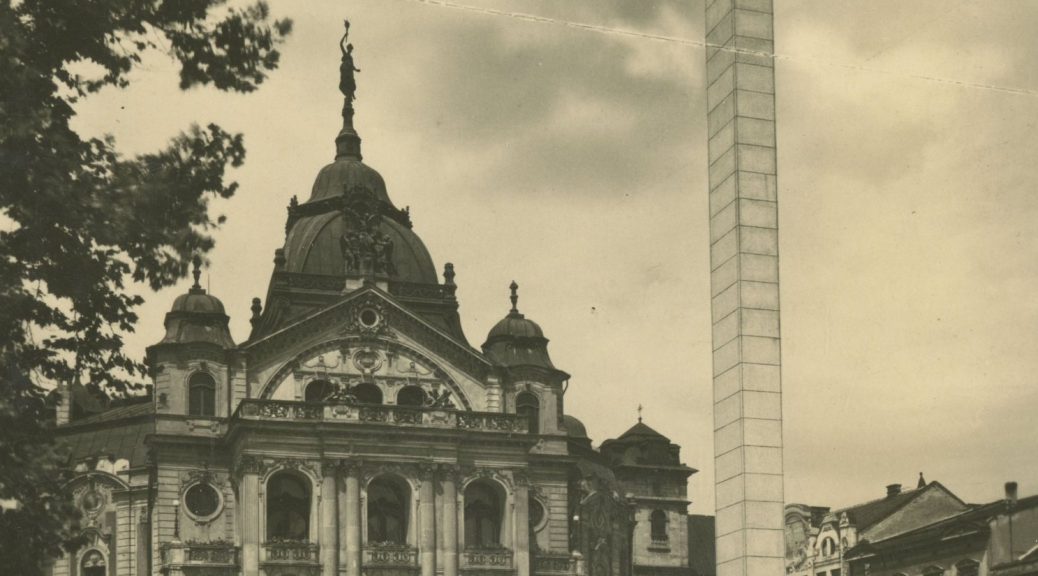
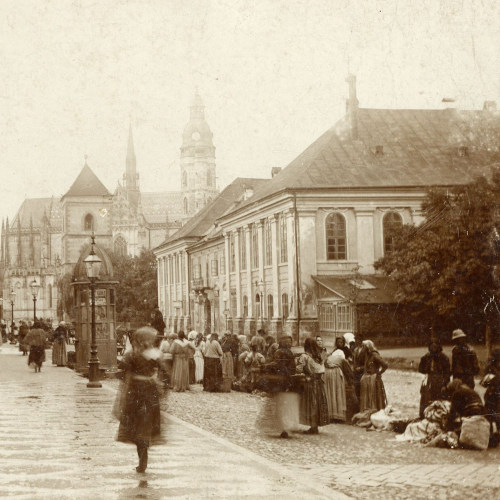
On the place where the famous Košice National Theatre is standing today was once a smaller but also very beautiful theatre. The constructions began in 1787, one year later it opened its gates to the public, but the building was not finished until 1790. The project was supervised by Štefan Brocký and Jozef Ján Tallher, the construction was led by Anton Schwaizer. With it, Košice got its first permanent theatre made of stone.

The Classicist building consisted of a coffee-house with billiard tables and a dining room, as well as a redoute and a smoking room in the Northern part and a theatre hall in the Southern part, both of which were connected by a hallway. In addition to the parterre, the theatre hall had three galleries with lodges and altogether a capacity of 500 visitors.

The first mentioned performance was Mozart’s The Abduction from the Seraglio in 1789, the year of the French Revolution (Mozart was still alive at that time). At first, plays were only performed in German, from 1816 alternately in German and Hungarian. In 1828 a men’s casino was opened in the building where the high society of Košice met to play board games.

In 1884 a fire broke out during a performance. For security reasons, the theatre was closed in 1894 and eventually demolished in 1897. In January 1897, the city council approved a new theatre project by Adolf Láng which was opened on the 18th of September 1899.

Image source: https://foto-ulic.appspot.com
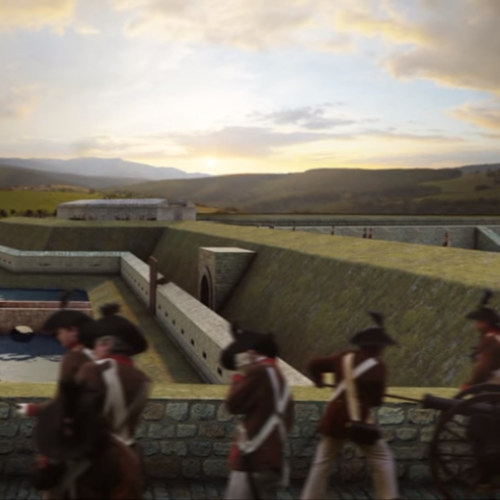
The Southern end of Hlavá Street, where now the shopping centre Aupark can be found, was once the location of an enormous Baroque citadel. Its construction began in 1671 in the context of the anti-Habsburg Uprisings in the Kingdom of Hungary, which lasted from 1607 to 1711.

The fort was erected right outside the Southern city walls, was star-shaped with five bastions. It occupied an area of approx. 25 hectares.
In the aftermath of the failed Tököli Uprising, the wall facing the city was demolished in 1685, rendering the fortification ineffective.

In 1713, the citadel was demolished by order of Emperor Charles III. After that, the remains of the fort were gradually removed to provide material for the construction of new buildings on Main Street.
In 2008 archaeological research officially began. When the construction of the shopping centre Aupark began in 2010, several parts of the bastion were unearthed. Some parts of the walls are exhibited nowadays in the vicinity of the shopping centre.
Image source: https://www.auparkkosice.sk/obsah/kosicka-citadela